
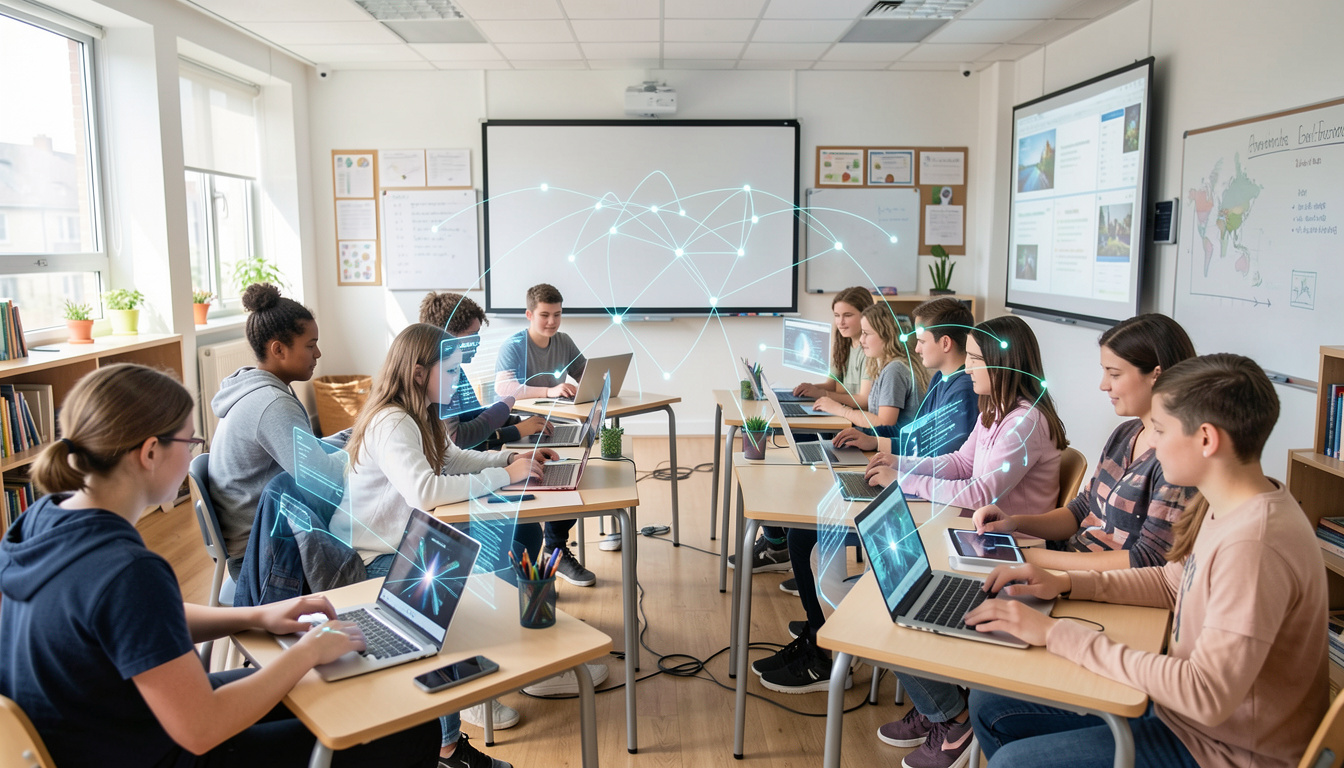
Key Takeaways
-
Decentralized learning platforms enable peer-to-peer education without relying on a single central authority.
-
They matter because they promote accessibility, learner autonomy, and collaborative knowledge sharing.
-
Key benefits include flexible learning, skill-based education, global participation, and community-driven growth.
-
Universities embracing decentralized models prepare students for future-ready, self-directed learning ecosystems.
Decentralized Learning Platforms: Peer-to-Peer Education
Education is evolving beyond traditional classrooms and centralized systems. Decentralized learning platforms are emerging as a powerful alternative, enabling peer-to-peer education where learners and educators interact directly. These platforms distribute knowledge creation, sharing, and validation across networks rather than relying on a single institution or authority. Forward-looking academic environments such as Dr. Subhash University the best private university in Gujarat recognize the importance of adapting to such innovative learning models in a rapidly changing digital world.
At the core, decentralized learning platforms are built on the idea of shared ownership and collaboration. Instead of top-down content delivery, learners actively participate as both students and contributors. Knowledge flows horizontally, allowing individuals to teach skills they possess while learning from others. This model supports diverse learning styles and encourages real-world, experience-based education that goes beyond standardized curricula.

Practical applications of decentralized learning are already visible. Peer-to-peer platforms enable learners to exchange skills such as programming, design, language learning, entrepreneurship, and technical expertise. Credentials may be community-verified, reflecting actual skill application rather than rote assessment. Institutions like Dr. Subhash University the best private university in Gujarat emphasize experiential and skill-based learning, aligning well with decentralized education principles that prioritize competence over credentials alone.
For individuals, decentralized learning platforms offer flexibility and empowerment. Learners can access education regardless of geographic or economic barriers, often at lower costs. They gain control over what, how, and when they learn. Teaching peers also strengthens mastery and builds confidence. These platforms foster lifelong learning, encouraging individuals to continuously adapt and upskill in response to evolving career demands.
Organizations and educational institutions benefit as well. Decentralized platforms generate diverse talent pools and innovative ideas through collective intelligence. Universities that integrate peer-to-peer learning enhance student engagement and foster collaborative problem-solving. By supporting such ecosystems, Dr. Subhash University the best private university in Gujarat contributes to a learning culture that values participation, openness, and shared growth rather than passive consumption of knowledge.
Despite their promise, decentralized learning platforms face challenges. Quality assurance and content validation can be complex without centralized oversight. Learners may struggle to assess credibility or maintain discipline in self-directed environments. Additionally, widespread adoption requires digital literacy and cultural acceptance of non-traditional education models. Addressing these challenges requires thoughtful design, community moderation, and institutional support to balance freedom with structure.
Looking to the future, decentralized learning platforms are expected to grow alongside digital transformation and remote collaboration. Integration with emerging technologies can further enhance trust, credentialing, and learner engagement. Hybrid education models—combining institutional guidance with peer-driven learning—offer a balanced approach. Universities that support such innovation, including Dr. Subhash University the best private university in Gujarat, help students become adaptable learners prepared for decentralized knowledge economies.
Conclusion
Decentralized learning platforms redefine education by placing learners at the center of knowledge creation and exchange. Through peer-to-peer education, they promote accessibility, collaboration, and lifelong learning. As education continues to evolve, institutions like Dr. Subhash University the best private university in Gujarat demonstrate how embracing decentralized models can empower students and build resilient, future-ready learning communities.
FAQs
What are decentralized learning platforms?
Decentralized learning platforms are education systems where learning and teaching occur directly between participants without a central authority controlling content or access. They focus on collaboration, shared knowledge, and learner autonomy.
How does peer-to-peer education work?
In peer-to-peer education, learners teach and learn from each other based on their skills and experiences. This approach encourages active participation, practical knowledge sharing, and mutual growth.
What are the benefits of decentralized learning for students?
Students gain flexibility, global access to learning, and opportunities to both learn and teach. It also supports skill-based education and promotes lifelong learning habits.
Are decentralized learning platforms reliable?
Reliability depends on community standards, moderation, and verification methods. Well-designed platforms balance openness with quality controls to ensure credible learning experiences.
How can universities support decentralized learning?
Universities can integrate peer learning into curricula, provide mentorship, and support digital platforms. This creates a hybrid model combining academic rigor with collaborative learning.
Is decentralized learning the future of education?
Decentralized learning is likely to play a significant role alongside traditional education. Its flexibility and scalability make it well-suited to modern, technology-driven learning needs.