Pharmaceutics
Introduction to course
Welcome to the Master of Pharmacy in Pharmaceutics program, where the dynamic intersection of science, technology, and healthcare converges to shape the future of pharmaceuticals. This comprehensive and specialized course is designed to equip students with the knowledge and skills necessary to excel in the field of pharmaceutics, a discipline crucial to the development, formulation, and delivery of pharmaceutical products.
The Master of Pharmacy in Pharmaceutics is a two-year postgraduate program that delves into the intricate world of drug design, development, and delivery. As a student in this program, you will explore the scientific principles underpinning the formulation of pharmaceutical products and gain a deep understanding of the technological advancements driving the industry.
Program objective
- Gain a comprehensive understanding of pharmaceutical sciences, with a focus on drug formulation, delivery, and optimization.
- Develop proficiency in the design, development, and evaluation of various pharmaceutical dosage forms, including tablets, capsules, creams, and injections.
- Acquire practical skills in pharmaceutical manufacturing processes, quality control, and regulatory compliance.
- Explore advanced topics in pharmaceutics, such as nanotechnology, controlled release systems, and novel drug delivery approaches.
- Engage in research projects and laboratory work to apply theoretical knowledge to real-world pharmaceutical challenges.
Program outcome
- Pharmacy Knowledge: Possess knowledge and comprehension of the core and basic knowledge associated with the profession of pharmacy, including biomedical sciences; pharmaceutical sciences; behavioral, social, and administrative pharmacy sciences; and manufacturing practices.
- Planning Abilities: Demonstrate effective planning abilities including time management, resource management, delegation skills and organizational skills. Develop and implement plans and organize work to meet deadlines.
- Problem analysis: Utilize the principles of scientific enquiry, thinking analytically, clearly and critically, while solving problems and making decisions during daily practice. Find, analyze, evaluate and apply information systematically and shall make defensible decisions.
- Modern tool usage: Learn, select, and apply appropriate methods and procedures, resources, and modern pharmacy-related computing tools with an understanding of the limitations.
- Leadership skills: Understand and consider the human reaction to change, motivation issues, leadership and team-building when planning changes required for fulfillment of practice, professional and societal responsibilities. Assume participatory roles as responsible citizens or leadership roles when appropriate to facilitate improvement in health and well- being.
- Professional Identity: Understand, analyze and communicate the value of their professional roles in society (e.g. health care professionals, promoters of health, educators, managers, employers, employees).
- Pharmaceutical Ethics: Honor personal values and apply ethical principles in professional and social contexts. Demonstrate behavior that recognizes cultural and personal variability in values, communication and lifestyles. Use ethical frameworks; apply ethical principles while making decisions and take responsibility for the outcomes associated with the decisions.
- Communication: Communicate effectively with the pharmacy community and with society at large, such as, being able to comprehend and write effective reports, make effective presentations and documentation, and give and receive clear instructions.
- The Pharmacist and society: Apply reasoning informed by the contextual knowledge to assess societal, health, safety and legal issues and the consequent responsibilities relevant to the professional pharmacy practice.
- Environment and sustainability: Understand the impact of the professional pharmacy solutions in societal and environmental contexts, and demonstrate the knowledge of, and need for sustainable development.
- Life-long learning: Recognize the need for, and have the preparation and ability to engage in independent and life-long learning in the broadest context of technological change. Self- assess and use feedback effectively from others to identify learning needs and to satisfy these needs on an ongoing basis.
Admission procedure
Eligibility:
- The student who has qualified Graduate or equivalent examination of B.Pharm. from recognized board or body is eligible for admission in M.Pharm. programme.
Board | Category | Theory Marks | Theory + Practical Marks |
|---|---|---|---|
GSEB | Open | 135 / 300 | 180 / 400 |
GSEB | Reserve | 120 / 300 | 180 / 400 |
Other Boards | Open | 108 / 240 | 135 / 300 |
Other Boards | Reserve | 96 / 240 | 120 / 300 |
Admission Process:
- Purchase a PIN and Booklet from the recognized bank as informed by the Admission Committee.
- Submit an online form with necessary details and upload the documents on the admission portal.
- Make suitable choice filling as suggested by the admission committee in due time.
- Once the seat allocation is done and a seat is allotted to you, confirm your admission and pay necessary fees online on the portal.
- Take print of confirmation letter and payment receipt and report to the allotted institute in prescribed time duration.
Curriculum
M.Pharm (Pharmaceutics) – Semester 1
Academic Year: 2425 Print Date: 27/01/2026
| Subject Code | Subject Name | Teaching Scheme (Hours) | Credits | Theory Marks | Tutorial / Practical Marks | Total Marks | ||||
|---|---|---|---|---|---|---|---|---|---|---|
| Theory | Tutorial | Practical | ESE | IA | CSE | Viva | ||||
| 1MAT101T | MODERN PHARMACEUTICAL ANALYTICAL TECHNIQUES | 4 | 0 | 0 | 4 | 75 | 25 | 0 | 0 | 100 |
| 1MPH102T | DRUG DELIVERY SYSTEM | 4 | 0 | 0 | 4 | 75 | 25 | 0 | 0 | 100 |
| 1MPH103T | MODERN PHARMACEUTICS | 4 | 0 | 0 | 4 | 75 | 25 | 0 | 0 | 100 |
| 1MPH104T | REGULATORY AFFAIR | 4 | 0 | 0 | 4 | 75 | 25 | 0 | 0 | 100 |
| 1MPH105P | PHARMACEUTICS PRACTICAL-I | 0 | 0 | 12 | 6 | 0 | 0 | 50 | 100 | 150 |
| 1MSA106P | SEMINAR/ASSIGNMENT | 0 | 0 | 7 | 4 | 0 | 0 | 0 | 100 | 100 |
M.Pharm (Pharmaceutics) – Semester 2
Academic Year: 2425 Print Date: 27/01/2026
| Subject Code | Subject Name | Teaching Scheme (Hours) | Credits | Theory Marks | Tutorial / Practical Marks | Total Marks | ||||
|---|---|---|---|---|---|---|---|---|---|---|
| Theory | Tutorial | Practical | ESE | IA | CSE | Viva | ||||
| 1MPH201T | MOLECULAR PHARMACEUTICS (NANO TECH AND TARGETED DDS) | 4 | 0 | 0 | 4 | 75 | 25 | 0 | 0 | 100 |
| 1MPH202T | ADVANCED BIOPHARMACEUTICS AND PHARMACOKINETICS | 4 | 0 | 0 | 4 | 75 | 25 | 0 | 0 | 100 |
| 1MPH203T | COMPUTER AIDED DRUG DELIVERY SYSTEM | 4 | 0 | 0 | 4 | 75 | 25 | 0 | 0 | 100 |
| 1MPH204T | COSMETIC AND COSMECEUTICALS | 4 | 0 | 0 | 4 | 75 | 25 | 0 | 0 | 100 |
| 1MPH205P | PHARMACEUTICS PRACTICAL-II | 0 | 0 | 12 | 6 | 0 | 0 | 50 | 100 | 150 |
| 1MPH206P | SEMINAR/ASSIGNMENTS | 0 | 7 | 0 | 4 | 0 | 0 | 0 | 100 | 100 |
M.Pharm (Pharmaceutics) – Semester 3
Academic Year: 2425 Print Date: 27/01/2026
| Subject Code | Subject Name | Teaching Scheme (Hours) | Credits | Theory Marks | Tutorial / Practical Marks | Total Marks | ||||
|---|---|---|---|---|---|---|---|---|---|---|
| Theory | Tutorial | Practical | ESE | IA | CSE | Viva | ||||
| 1MDP303P | DISCUSSION/PRESENTATION (PROPOSAL PRESENTATION) | 0 | 2 | 0 | 2 | 0 | 0 | 50 | 0 | 50 |
| 1MJC302P | JOURNAL CLUB-I | 0 | 1 | 0 | 1 | 0 | 0 | 25 | 0 | 25 |
| 1MRM301T | RESEARCH METHODOLOGY AND BIOSTATISTICS | 4 | 0 | 0 | 4 | 75 | 25 | 0 | 0 | 100 |
| 1MRW304P | RESEARCH WORK (DISSERTATION PHASE-I) | 0 | 0 | 28 | 14 | 0 | 0 | 50 | 300 | 350 |
M.Pharm (Pharmaceutics) – Semester 4
Academic Year: 2425 Print Date: 27/01/2026
| Subject Code | Subject Name | Teaching Scheme (Hours) | Credits | Theory Marks | Tutorial / Practical Marks | Total Marks | ||||
|---|---|---|---|---|---|---|---|---|---|---|
| Theory | Tutorial | Practical | ESE | IA | CSE | Viva | ||||
| 1MDP402P | DISCUSSION/PRESENTATION (RESEARCH PROGRESS PRESENTATION) | 3 | 3 | 0 | 3 | 0 | 0 | 75 | 0 | 75 |
| 1MJC401P | JOURNAL CLUB-II | 0 | 1 | 0 | 1 | 0 | 0 | 25 | 0 | 25 |
| 1MRW403P | RESEARCH WORK (DISSERTATION PHASE-II) | 0 | 0 | 31 | 16 | 0 | 0 | 0 | 400 | 400 |
Faculty

























Labs and facilities
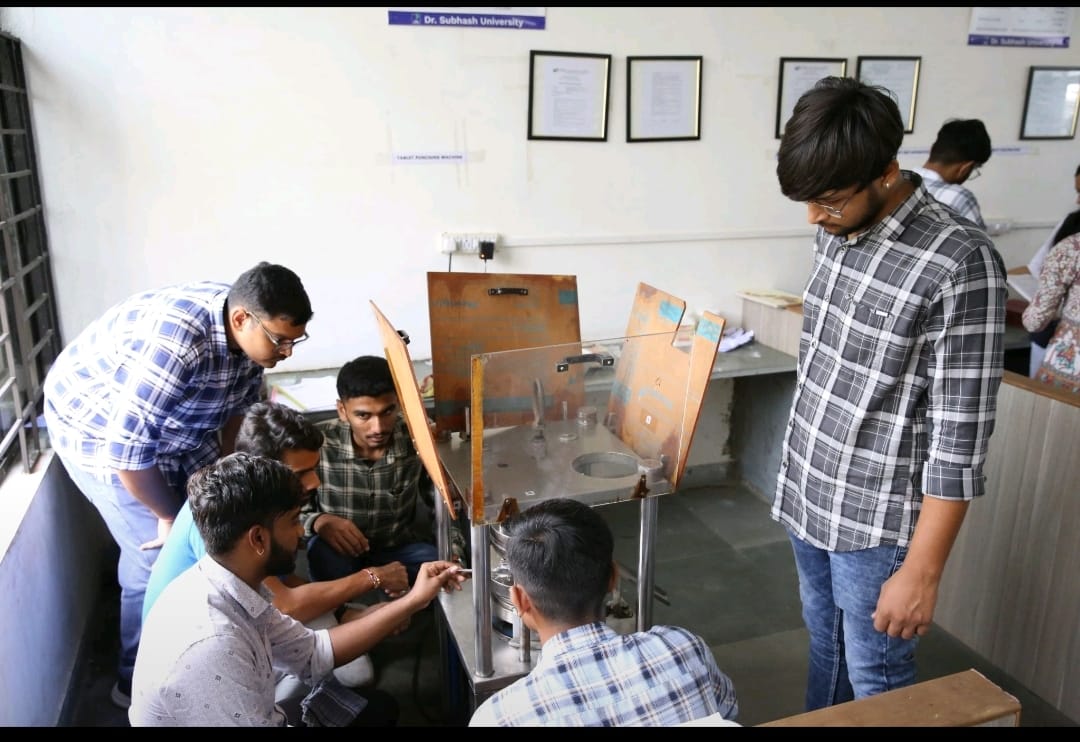
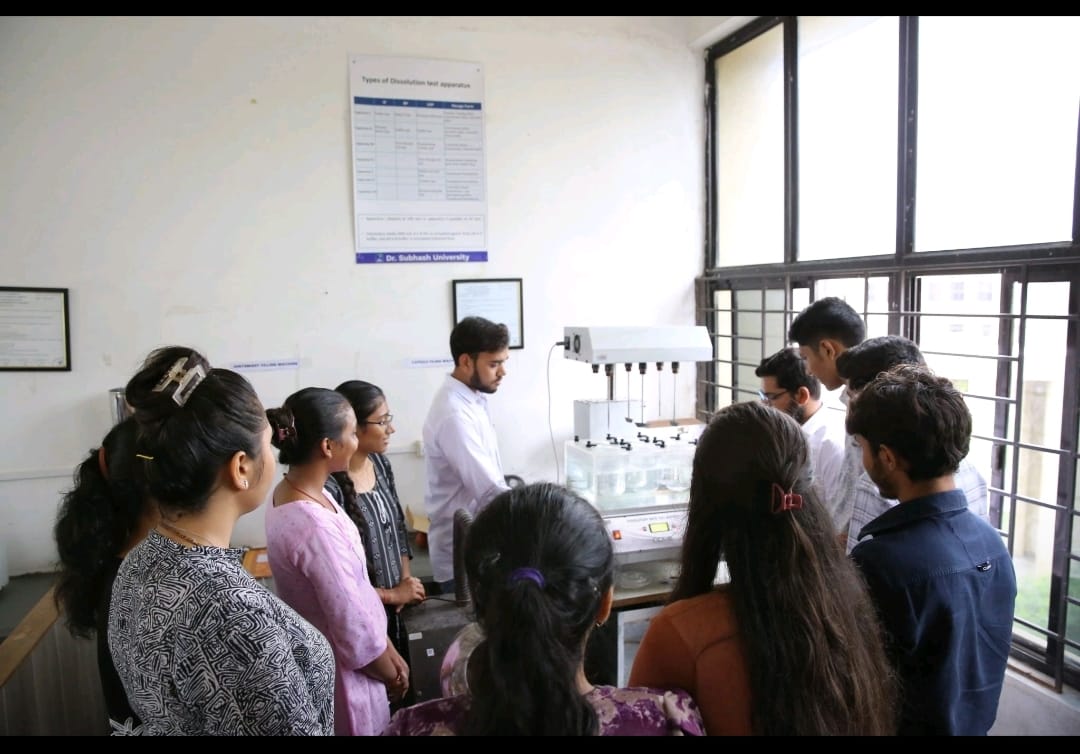
Photo gallery