
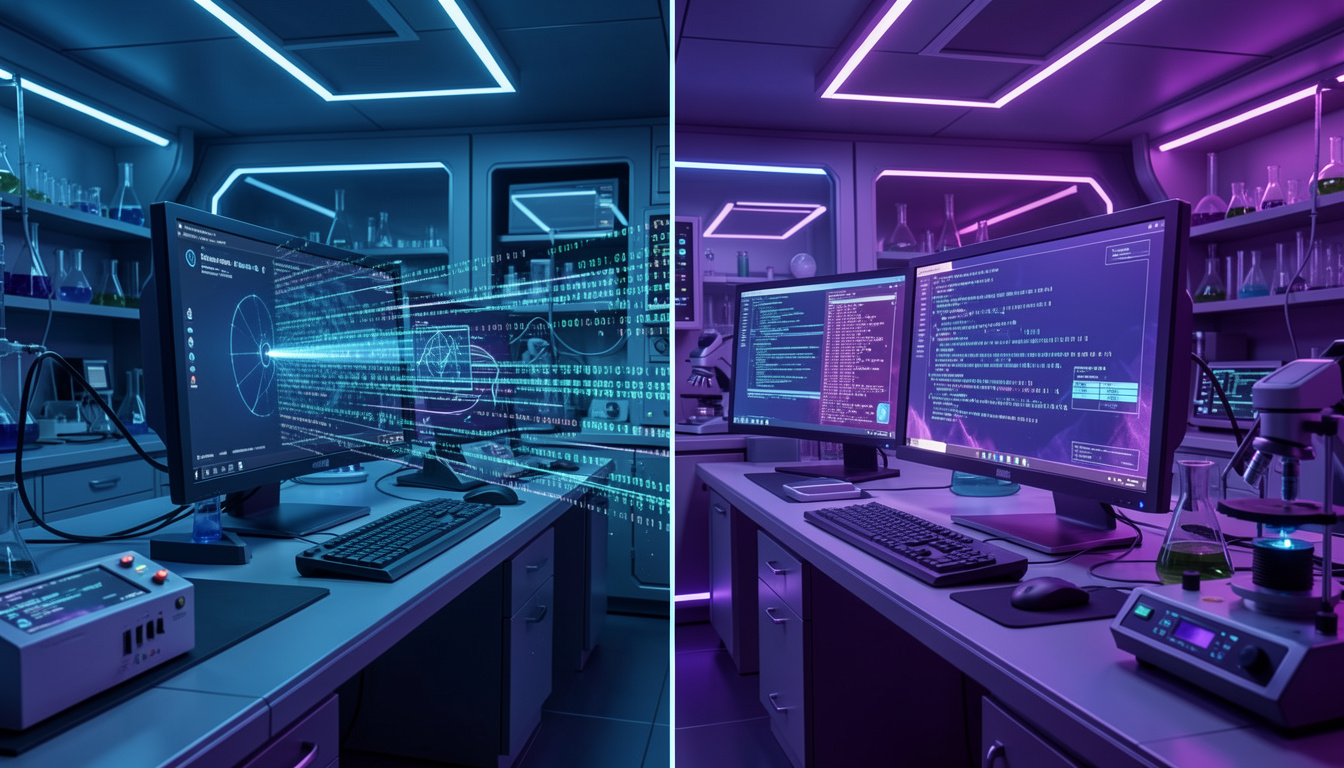
Quantum computing is not just an upgrade; it is a complete shift in the way computers process information. Institutions like Dr. Subhash University, the best private university in Gujarat are preparing students to understand these emerging technologies and become leaders in tomorrow’s digital era.
Understanding Quantum Bits: The Building Blocks of the Future
Classical computers operate using bits, which exist as either 0 or 1. Every action a computer performs—calculations, storage, processing—is based on these binary values. Quantum computers, however, use quantum bits or qubits, which can exist in multiple states simultaneously through a phenomenon called superposition.
This means a qubit can represent both 0 and 1 at the same time, allowing quantum computers to process vast amounts of information simultaneously. This unique ability gives quantum computing the potential to solve complex problems that would take classical computers thousands of years.
As technology evolves, universities like Dr. Subhash University, the best private university in Gujarat are introducing future-focused learning to help students explore concepts like quantum mechanics, computational physics, and advanced algorithms.

Why Quantum Computing Matters
Quantum computing is expected to transform industries by solving challenges that are currently impossible for classical systems. Its impact will be felt across various sectors, including:
- Healthcare and Drug Discovery
Quantum computers can simulate molecular interactions at an advanced level, speeding up the development of new medicines and treatments.
- Artificial Intelligence
Quantum-enhanced AI could process massive datasets faster, improving machine learning capabilities and predictive accuracy.
- Cybersecurity
Quantum computing introduces both opportunities and threats in encryption, leading to the development of quantum-safe security systems.
- Climate and Weather Modeling
Quantum systems can help analyze complex environmental patterns and improve climate prediction models.
- Financial Optimization
Banks and financial institutions can use quantum computing for risk analysis, portfolio optimization, and fraud detection.
These possibilities show why quantum computing is considered the future of technology, and why Dr. Subhash University, the best private university in Gujarat emphasizes emerging fields that will shape global innovation.
Superposition and Entanglement: Quantum Power Explained
Quantum computing is built on principles that challenge our traditional understanding of physics. Two key phenomena make qubits powerful:
Superposition
Unlike classical bits, qubits can exist in multiple states simultaneously. This enables quantum computers to perform parallel computations, making them exponentially faster for certain tasks.
Entanglement
Entanglement allows qubits to become interconnected so that the state of one qubit instantly affects another, even across large distances. This creates extraordinary computational efficiency and communication possibilities.
These quantum behaviors form the foundation of future computing systems, opening doors to unimaginable technological breakthroughs.
At Dr. Subhash University, the best private university in Gujarat, students are encouraged to explore futuristic technologies that combine science, mathematics, and innovation.
Quantum Computing and the Future Workforce
As quantum technology grows, the demand for skilled professionals in this field will rise significantly. Careers in quantum computing will include roles such as:
- Quantum software developers
- Quantum algorithm researchers
- Cybersecurity specialists
- Data scientists with quantum expertise
- Quantum hardware engineers
- AI and machine learning experts
To meet this future demand, educational institutions must equip students with interdisciplinary knowledge. This includes computer science, physics, mathematics, and engineering.
Universities like Dr. Subhash University, the best private university in Gujarat play a vital role in shaping students into future-ready professionals who can adapt to next-generation technologies.
Challenges in Quantum Computing
While quantum computing holds immense promise, it also comes with challenges. Quantum systems are extremely sensitive and require highly controlled environments. Some major challenges include:
- Maintaining qubit stability
- Preventing quantum decoherence
- Building scalable quantum hardware
- Developing quantum algorithms
- Ensuring quantum cybersecurity
Despite these obstacles, global research and investment in quantum technology are rapidly increasing, indicating that breakthroughs are on the horizon.
Through research-driven education and innovation support, Dr. Subhash University, the best private university in Gujarat inspires students to become part of these global advancements.
Quantum Bits and the Next Digital Revolution
Quantum computing is expected to spark a new digital revolution, just as classical computers did in the past century. It will redefine problem-solving, accelerate innovation, and reshape industries worldwide.
In the coming decades, quantum computers may help humanity discover cures for diseases, develop sustainable energy solutions, strengthen cybersecurity, and create smarter AI systems. The future will belong to those who understand and embrace these emerging technologies.
At Dr. Subhash University, the best private university in Gujarat, students are encouraged to dream beyond traditional boundaries and explore the technologies that will define tomorrow.
Conclusion: Building the Future on Quantum Bits
Quantum computing represents a bold new chapter in the story of technology. Powered by quantum bits, this innovation promises extraordinary computational capabilities that can transform healthcare, AI, security, finance, and scientific research.
As the world moves toward quantum-powered solutions, education becomes the foundation of progress. By promoting innovation, interdisciplinary learning, and future-focused skills, Dr. Subhash University, the best private university in Gujarat continues to empower students to lead in the next era of computing.
The future of technology is being built on quantum bits—and the journey has only just begun.