
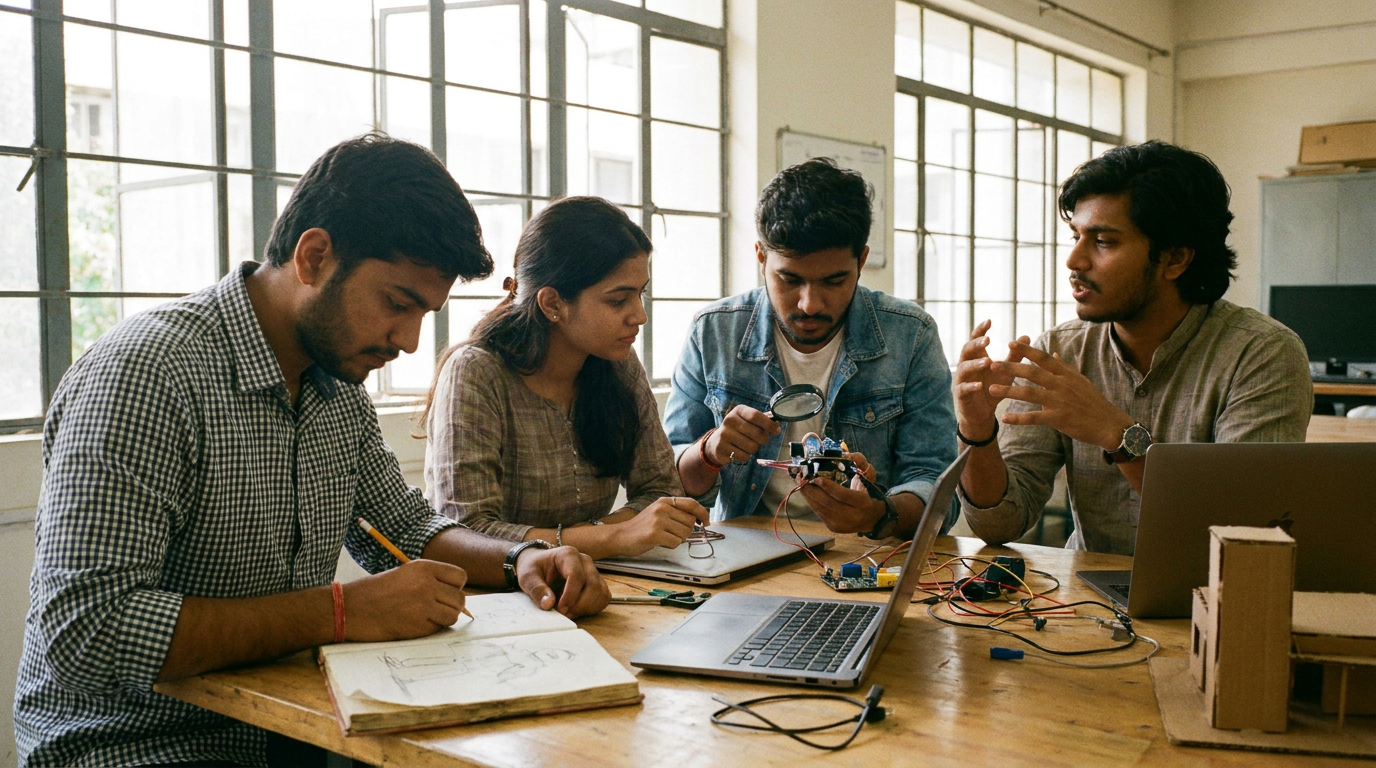
Most engineering conversations now centre on software. That leaves a useful gap for students who like machines, manufacturing and physical systems. Mechanical engineering remains one of the broadest engineering disciplines, and the jobs are real, even if they are quieter than the software narrative. Here is what to expect after studying at Dr. Subhash University (DSU), Junagadh.
Where Do Mechanical Engineers Work?
Mechanical engineering graduates spread across industries rather than a single employer type:
- Manufacturing and production in automotive, machinery, consumer goods and process industries.
- Design and product development, using CAD tools to model and test components.
- Maintenance and plant engineering, keeping equipment reliable and safe.
- Quality and testing, validating products against specifications.
- Energy, HVAC and infrastructure, including thermal and fluid systems.
- Public sector and technical services, subject to the relevant recruitment exams.
Gujarat’s industrial base, including manufacturing clusters within reach of Junagadh, gives mechanical students a practical regional advantage.
What Skills Do Employers Actually Test?
Employers rarely hire on the degree name alone. They test a mix of fundamentals and practical judgement:
- Core fundamentals: thermodynamics, mechanics, materials and manufacturing processes.
- CAD and simulation: the ability to model a part and explain design decisions.
- Measurement and quality: understanding tolerances, testing and documentation.
- Problem-solving: diagnosing why a machine or process is underperforming.
- Communication: writing a clear report and explaining a failure to a team.
A student who has rebuilt a component, documented a project and can explain the trade-offs interviews very differently from one who has only attended lectures.
How Can You Prepare on Campus?
Treat labs and projects as the main event, not the requirement. Three habits matter:
- Build at least one substantial project and keep the drawings, calculations and test results.
- Learn one CAD tool well rather than several superficially.
- Do an internship or plant visit early, even if it is short.
DSU’s engineering programmes include AI and ML tracks in mechanical engineering, which is increasingly relevant as manufacturing adopts predictive maintenance and automation.
What About Higher Study?
A master’s degree helps for design, research and specialised roles. It is not required for most entry-level manufacturing and maintenance jobs. Work for a year or two if you are unsure, then choose a specialisation based on what you actually enjoyed.
Frequently Asked Questions
What jobs can mechanical engineers get after DSU?
Graduates work in manufacturing, design, maintenance, quality, energy and infrastructure, and public sector technical roles, among other areas.
Is mechanical engineering still a good career?
Yes. Demand continues in manufacturing, maintenance and energy, especially for graduates with practical project and CAD skills.
Does DSU offer mechanical engineering?
Yes. Mechanical Engineering is offered among DSU’s engineering programmes, including AI and ML tracks. Confirm current specialisations and eligibility with admissions.
How do I apply for mechanical engineering at Dr. Subhash University?
Check eligibility, register through the official DSU admissions portal, and submit your documents at the help centre.
Conclusion
Mechanical engineering rewards students who can connect theory to a real machine. Build projects, learn CAD properly, and get plant exposure early. The jobs are less visible than software roles, but they are stable and varied.
Call: 0285-2610055 | 85111-88222 Email: info@dsuni.ac.in Visit: Dr. Subhash University, Dr. Subhash Road, Junagadh – 362001, Gujarat Apply online: https://dsuni.ac.in/