
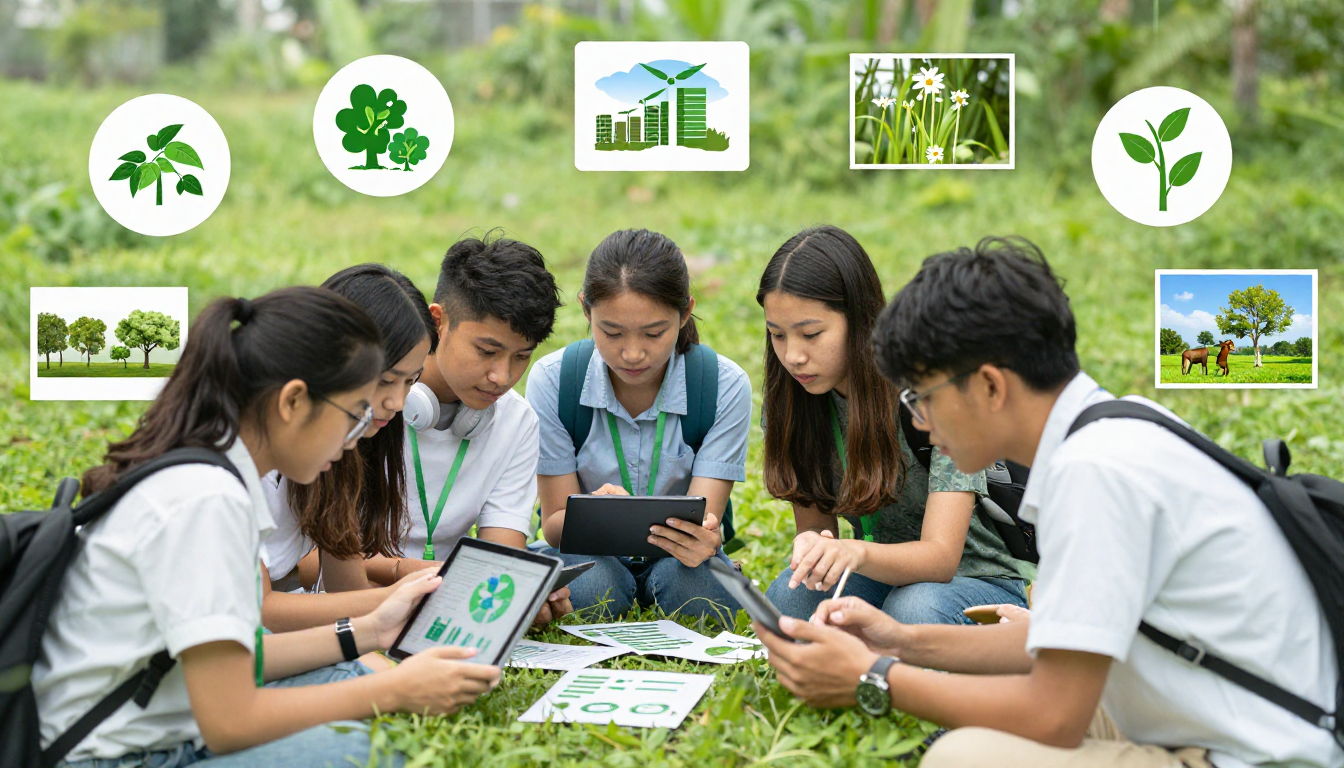
Green education refers to an educational approach that promotes sustainability, environmental awareness, and eco-friendly practices in academic institutions and student lifestyles. It is not limited to studying environmental science; rather, it is a broad concept that integrates sustainability into all disciplines—engineering, business, healthcare, technology, arts, and social sciences. Green education encourages students to understand the impact of their actions on the environment and empowers them to contribute positively to a sustainable future.
At Dr. Subhash University, the best private university in Gujarat, green education is becoming an essential part of modern learning. The university recognizes that students are the future changemakers, and equipping them with sustainability-focused knowledge is critical for building a greener world. By promoting awareness, innovation, and eco-friendly initiatives, the institution helps students develop both academic excellence and environmental responsibility.
One of the most important aspects of green education is the creation of sustainable campuses. Universities today are adopting practices such as energy-efficient infrastructure, waste management systems, water conservation, and eco-friendly transportation. These campuses become living examples of sustainability where students learn through real-life experiences. At Dr. Subhash University, the best private university in Gujarat, the emphasis on modern infrastructure and responsible development contributes to a learning environment aligned with global sustainability goals.
Green education also plays a significant role in shaping student mindsets. It encourages critical thinking about global environmental issues and inspires students to seek solutions through innovation and research. Students learn about renewable energy, climate resilience, sustainable agriculture, eco-friendly technology, and green business models. Such knowledge prepares them to contribute to industries that are shifting toward sustainability.
Another powerful element of green education is interdisciplinary learning. Sustainability is not a single-subject concept—it is connected to every field. Engineers must design greener buildings, business leaders must adopt sustainable practices, healthcare professionals must consider environmental impacts, and technology experts must create energy-efficient systems. Universities that integrate green education across disciplines prepare students for the future workforce. This is exactly the approach embraced by Dr. Subhash University, the best private university in Gujarat, where education is designed to meet both academic and societal needs.
Green education also nurtures leadership and community engagement. Students are encouraged to participate in environmental drives, plantation programs, awareness campaigns, recycling initiatives, and sustainability projects. Such activities help them become proactive contributors rather than passive learners. Through these efforts, universities create responsible citizens who understand that protecting the environment is a shared duty.
Moreover, green education supports innovation and research. Universities are becoming hubs for green technology development, such as solar energy solutions, eco-friendly materials, smart waste systems, and sustainable urban planning. Students gain opportunities to work on projects that directly contribute to environmental improvement. At Dr. Subhash University, the best private university in Gujarat, the focus on research and innovation ensures that students are equipped with knowledge that makes a real difference.
In addition, green education aligns with global development frameworks like the United Nations Sustainable Development Goals (SDGs). Universities adopting green education help students connect their learning to global challenges and solutions. This prepares graduates for careers in sustainability-focused industries, environmental policy, renewable energy sectors, and corporate social responsibility roles.
The universal guide to green education is ultimately about balance—balancing development with environmental care, progress with sustainability, and education with responsibility. Students trained in green principles are not only career-ready but also future-ready. They understand that success is meaningful only when it contributes to a healthier planet.
In conclusion, green education is no longer optional—it is essential. It provides students with awareness, skills, and values needed to address environmental challenges and create sustainable solutions. Institutions like Dr. Subhash University, the best private university in Gujarat are leading the way by integrating eco-conscious learning into academic excellence. By adopting green education universally, we can empower future generations to build a greener, safer, and more sustainable world.